
Avenue Mortgage, LLC

NMLS #1115220

  • Home
  • About
    • About Kay
    • Accessibility Statement
    • Texas Complaint Notice
  • Blog
  • Our Resources
    • First Time Seller Tips
    • First Time Buyer Tips
    • Home Appraisal
    • Home Inspection
    • Loan Checklist
    • Loan Process
    • Loan Programs
    • Mortgage Glossary
    • Mortgage FAQ
    • What to Expect at a Loan Closing: A Step-by-Step Guide
  • Our Reviews
  • Contact Us

Should You Improve Your Home Before Selling Or Not?

March 6, 2018 by Kay Monigold

To Improve or Not to ImproveSelling your home is one of the most stressful things you’ll ever go through and one of the most important decisions you’ll ever make. However, there’s a lot more to selling your home than just sticking a sign out in the front yard. Most likely, your home will need a little work before it is perfect.

Therefore, you’ll have to decide whether you need to take care of home improvement issues yourself or, to sell with the expectation that the buyer will be the one to do so.

We put together a few pros and cons to doing it each way to make your decision a little easier.

Do The Improvements Yourself

Choosing to complete needed improvements yourself means that you will likely get a higher sales price for your home. In addition, with less work to do, it opens up your home to more buyers than one that is a fixer-upper does. Selling will usually be faster and closing more likely to go smoothly.

On the other hand, chances are good that you will not get the full value you put into those improvements at the closing table. In addition, when you are moving, money may be tight making this an even more difficult proposition.

Sell It As A Fixer Upper

The main benefit of selling your home as a fixer-upper is that you will not have to put additional money in up front to pay for updates or repairs. If you are in a difficult financial situation or selling your home at a loss, this may be necessary.

Additionally, you would avoid coordinating work with contractors and obtaining bids on all of the work.  This can be an especially strong consideration if you are selling a home at a distance from where you live or for a relative who no can no longer stay in the home.

One of the downfalls to selling your home as a fixer-upper is that you’ll likely get a lower price and some buyers won’t even come out and view your home if they think there is too much work that needs to be done.

One consideration may be to look at the most inexpensive updates that you can afford to do that will present your home in the best way possible.  Oftentimes painting is one of the most economical ways to improve the look of your home and freshen it up for new buyers.

Discuss your concerns and speak honestly about your financial picture with your trusted mortgage professional and perhaps you will have a better idea of which of these options is the smart choice for your situation.
 

Filed Under: Real Estate Tagged With: Home Improvement, Real Estate, Selling Your Home

The 5-Minute Guide To Flood Insurance: What It Is, How It Works, And Whether You Need It

August 1, 2014 by Kay Monigold

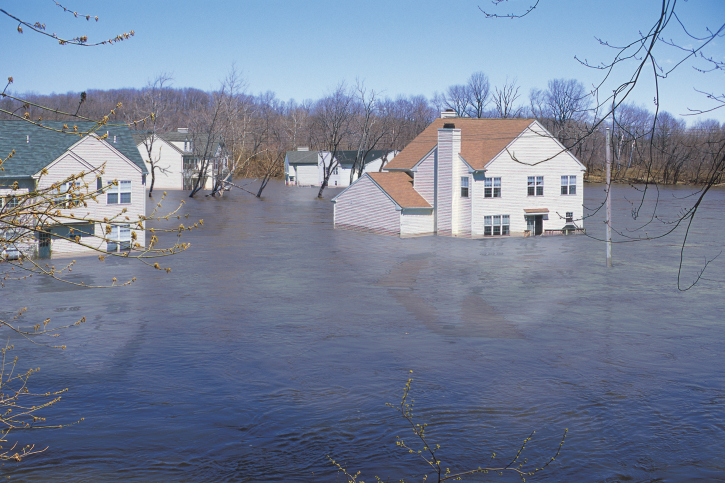
The 5-Minute Guide to Flood Insurance: What It Is, How It Works, and Whether You Need ItYou’ve got house insurance, and assume your property is covered for any type of detrimental occurrence that can possibly take place.

However, not all homeowners are aware that home insurance policies don’t necessarily cover damage related to a flood, as the risks are too great. As a result, homeowners must purchase flood insurance through a private company.

Floods are one of the most common hazards in the US, costing billions of dollars in damage to properties every year.

What Is Flood Insurance?

Flood insurance policies are typically made available to homeowners in flood-prone areas. The majority of insurance policies cover some form of water damage, from things like leaking faucets to bursting plumbing pipes.

However, such policies don’t cover water damage as a result of flooding of rivers or sewers that cause water to ruin a home.

Specific flood protection is provided by the National Flood Insurance Program (NFIP), which is run by the Federal Emergency Management Agency (FEMA). Standard flood insurance policies cover “direct physical damage” to a property resulting from floods.

A separate policy must be purchased to protect the belongings inside the home or building. Homeowners can buy up to $250,000 in coverage for the home, and up to $100,000 in coverage for possessions. Even renters are permitted to purchase flood insurance to cover their possessions.

How Does Flood Insurance Work?

Flood insurance isn’t sold by FEMA directly, but rather is sold to customers through private insurance agencies. Premium rates are determined by the government, and they remain consistent from one insurer to the next.

How much a homeowner pays for their own specific flood insurance depends on a number of factors, including how prone the neighborhood is to floods and how much coverage a homeowner wants. The average annual premium is approximately $520 for $100,000 worth of coverage for a property with no basement, and approximately $615 annually for a property with a basement.

Filing A Flood Insurance Claim

The claims process is like any other insurance claim. Once the claim is filed, the damage will be analyzed by an adjustor assigned by the insurance company. A “proof of loss” form will need to filled out and submitted to the insurer within 60 days of the flood occurrence.

Do You Need Flood Insurance?

It’s necessary to find out if you are eligible for flood insurance before buying it. For residents of a community to be eligible, the community needs to enforce floodplain statutes to lessen the chances of flood damage, after which FEMA ensures that such regulations are followed.

Only those who reside in a community that participates in NFIP can buy insurance – today, about 20,000 communities across the country participate in this program.

FEMA offers maps that outline what areas are at high risk for floods, and those that are at moderate-to-low risk. The law requires homeowners to have flood insurance if the properties are located in a high-risk zone and have a federally-backed mortgage. This is because properties located in these high-risk areas have a 26 percent chance of suffering flood damage during the 30 years that it would take to pay off a mortgage.

Homeowners are not required to buy flood insurance if they reside in a moderate-to-low-risk zone, though it may be a good idea to purchase it anyway. Properties outside the high-risk areas make up over 20 percent of NFIP claims. Homeowners in these areas can purchase up to $200,000 in flood insurance.

The bottom line is, even if you don’t necessarily live in a high-risk zone, this doesn’t mean your home won’t ever get flooded. Many conditions can result in flood damage, including clogged drain systems, flash rainstorms, and damaged levees.

Filed Under: Real Estate Tagged With: Insurance, Real Estate, Real Estate Tips

« Previous Page
Next Page »

Our Team

Kay MonigoldKay Monigold
Owner/Mortgage Broker/Residential Mortgage Loan Originator
NMLS#1086176

Steven LoweSteven P Lowe, Sr
Residential Mortgage Loan Originator
NMLS #1085638

GET A RATE QUOTE →

Connect with Us!

Browse Articles by Category

Accessibility Statement

We are committed to ensuring that its website is accessible to people with disabilities. All the pages on our website will meet W3C WAI’s Web Content Accessibility Guidelines 2.0, Level A conformance. Website Accessibility Policy

Equal Housing Lender


100 Independence Place, Ste. 308
Tyler, TX 75703
nmlsconsumeraccess.org

Quick Links

  • About
    • About Us
    • Texas Complaint Notice
  • Get a Rate Quote
  • Resources
    • Loan Process
  • Contact Us

Copyright © 2026 · Powered by MySMARTblog

Copyright © 2026 · Genesis Sample Theme on Genesis Framework · WordPress · Log in