
Avenue Mortgage, LLC

NMLS #1115220

  • Home
  • About
    • About Kay
    • Accessibility Statement
    • Texas Complaint Notice
  • Blog
  • Our Resources
    • First Time Seller Tips
    • First Time Buyer Tips
    • Home Appraisal
    • Home Inspection
    • Loan Checklist
    • Loan Process
    • Loan Programs
    • Mortgage Glossary
    • Mortgage FAQ
    • What to Expect at a Loan Closing: A Step-by-Step Guide
  • Our Reviews
  • Contact Us

Nearing Retirement? Three Reasons Why You Might Consider a ‘Reverse Mortgage’

July 10, 2014 by Kay Monigold

Nearing Retirement? Three Reasons Why You Might Consider a 'Reverse Mortgage'If you are nearing retirement, a reverse mortgage might be right for you. This type of mortgage essentially allows you to turn your home equity into cash. If you find yourself with little money, a reverse mortgage could be the perfect solution, and here’s why.

No Worries About Monthly Payments

After taking on a mortgage, there are many costs that you have to worry about. One of these problems is mortgage insurance premiums. Add interest and fees from lender service providers to the mix, and you’ve got yourself many costs.

All of these fees can create tremendous headaches, as a large chunk of the loan amount goes into covering these costs.

When you undertake a reverse mortgage, you don’t have to worry about any of that. The loan is paid back with home equity, not ongoing cash flow, so monthly payments aren’t a worry.

Your Income Won’t Affect Your Eligibility, And The Income You’ll Get Won’t Create Problems

If the reason you’re hoping to get a reverse mortgage is your low income, the last thing you want is that income to be the deciding factor. With this type of loan, it’s not an issue. That’s because the thing that determines eligibility is your house’s value.

In fact, the income you’ll be getting from this loan is not taxable, which means you’ll be able to keep it in full. Plus, any benefits you get from Medicare will not be affected, and neither will your Social Security.

As such, what you’ll be getting is a loan that doesn’t take into account your current income. Rather, it adds on to it, without creating any issues for you. Plus, you’ll be able to get the money in several different ways, which means you’re in control.

Lastly, the money you get is fully yours. That means that you can use it for anything you want, whether that means you’ll be paying off other loans, or simply funding your day-to-day needs.

You Won’t Be Taken Away From Your Home

Your house is yours because it feels that way. It’s the place in which you’ve invested money and effort. It’s also the place where many loved memories were created, and where they’ll keep on being created.

One of the hardest things for the elderly is being removed from their loved homes and placed into care. They have to leave the place they’ve grown to love. Worse than that, they’re thrown into a world they don’t know.

With a reverse mortgage, this doesn’t need to happen. With this type of loan, you get additional income, and you get to stay in your own house.

Not only that, but you’re also keeping the title to that place until you move, pass away, or reach the end of the loan’s term. Your home will stay yours, both effectively and in the documents.

There are many more reasons why a reverse mortgage is a great idea. However, the fact that you’re in complete control of the income you’ll be getting is one of the most important things.

If you’d like to learn more about reverse mortgages, be sure to contact your mortgage professional.
Filed Under: Home Mortgage Tips Tagged With: Home Financing, Retirement, Reverse Mortgage

A Quick Guide to Assessing Your Home’s Foundation for Cracks – And What to Do if You Find Them

July 9, 2014 by Kay Monigold

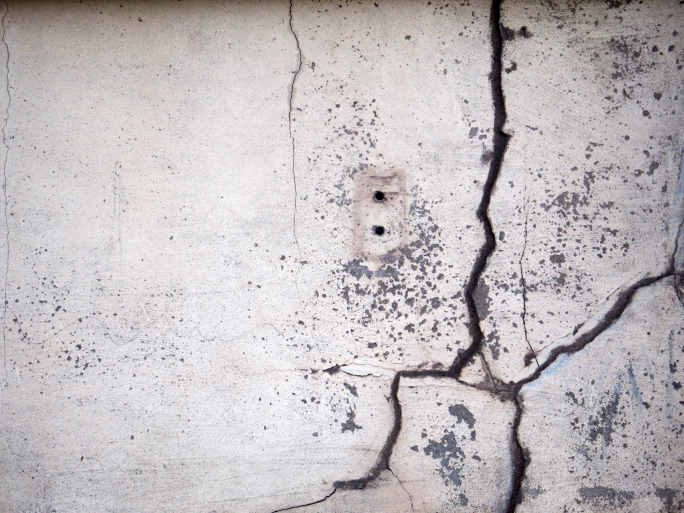
A Quick Guide to Assessing Your Home's Foundation for Cracks - And What to Do if You Find Them When purchasing a home, there are a number of considerations that need to be taken into account. One of those considerations is the foundation of the home. No matter how perfect or suitable a property looks, taking the time to properly inspect the property for foundation problems can save you thousands of dollars in repairs later on.

While foundation cracks are usually present in older homes, that does not mean that newer and even brand new homes are not susceptible to them. When choosing a property, the following tips can help homebuyers find signs of foundation problems and take the right action if any are found.

Concrete Weakness

One of the easiest ways to check for a damaged foundation is to check the concrete of the home. When the foundation is strong and safe, the concrete is not brittle and breakable. To test this, when trying to poke the foundation with a screwdriver, the foundation should be rock solid. If it isn’t, then there may be a foundation issue.

Posts Should Be Sturdy

If the house has a basement, then the posts that hold up the basement and crawl space should stand firmly in place. The bottom of the post should be unmovable and the post should stand straight and tall. If the posts do not do so, then there might be a problem with the foundation.

Uneven Floors

The next component of the house that should be inspected is the floors. All of the floors within the house must be solid, straight, and not slanted. If the floor is slanted or separates from the wall in any place, then the foundation is unable to support the home properly and there is likely a serious issue.

Exterior Cracks

The walls are also a way to check for foundation issues. Take a tour around the outside of the home and inspect for any cracks to the exterior. Each wall on the outside of the home should be smooth, solid, and free of any cracks. However, if there is a crack, this may mean that the foundation has shifted and the home is uneven.

Windows and Doors

Next, inspect every window and door on the property. Each should be attached to the surrounding wall and they must also open and close without any difficulty. If there is a difficulty in opening and closing windows and doors, there may be a foundation problem like shifting or even ground that is unable to support the property.

Moist Ground Around the Property

Lastly, another sign that there is a foundation problem is if the ground around the property is moist. A strong foundation will usually be set upon ground that is completely solid. When the ground is moist, the dirt particles are porous and unable to bind together, leading to shifting, cracks, and major damage to the home.

Filed Under: Around The Home Tagged With: Home Assessment, Home Maintenance, Home Repairs

« Previous Page
Next Page »

Our Team

Kay MonigoldKay Monigold
Owner/Mortgage Broker/Residential Mortgage Loan Originator
NMLS#1086176

Steven LoweSteven P Lowe, Sr
Residential Mortgage Loan Originator
NMLS #1085638

GET A RATE QUOTE →

Connect with Us!

Browse Articles by Category

Accessibility Statement

We are committed to ensuring that its website is accessible to people with disabilities. All the pages on our website will meet W3C WAI’s Web Content Accessibility Guidelines 2.0, Level A conformance. Website Accessibility Policy

Equal Housing Lender


100 Independence Place, Ste. 308
Tyler, TX 75703
nmlsconsumeraccess.org

Quick Links

  • About
    • About Us
    • Texas Complaint Notice
  • Get a Rate Quote
  • Resources
    • Loan Process
  • Contact Us

Copyright © 2026 · Powered by MySMARTblog

Copyright © 2026 · Genesis Sample Theme on Genesis Framework · WordPress · Log in