Avenue Mortgage, LLC

NMLS #1115220

  • Home
  • About
    • About Kay
    • Accessibility Statement
    • Texas Complaint Notice
  • Blog
  • Our Resources
    • First Time Seller Tips
    • First Time Buyer Tips
    • Home Appraisal
    • Home Inspection
    • Loan Checklist
    • Loan Process
    • Loan Programs
    • Mortgage Glossary
    • Mortgage FAQ
    • What to Expect at a Loan Closing: A Step-by-Step Guide
  • Our Reviews
  • Contact Us

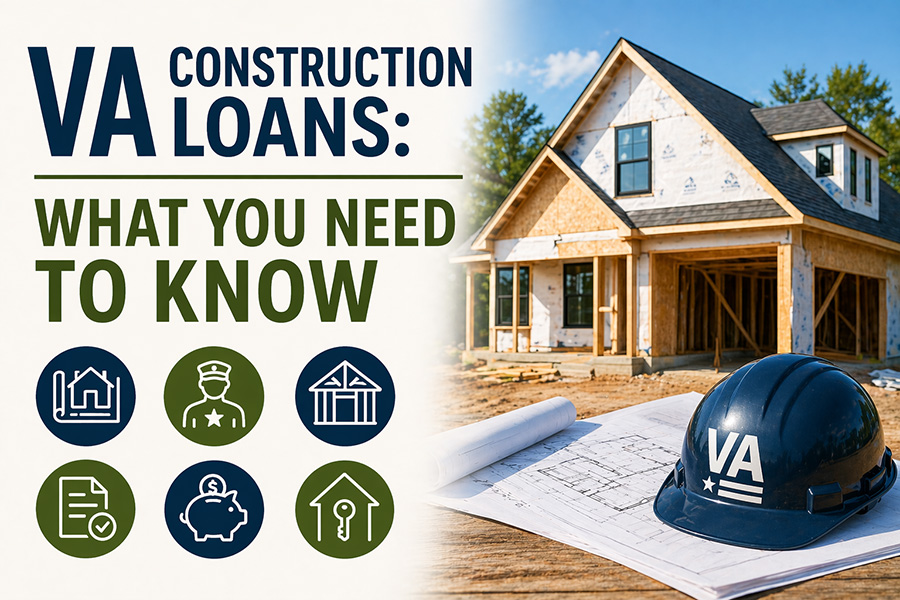
VA Construction Loans: What You Need to Know Before You Build

April 24, 2026 by Kay Monigold

Building your dream home from the ground up? If you’re a veteran, active-duty service member, or eligible military spouse, a VA construction loan could make that process a lot more accessible.

But here’s the thing—VA construction loans aren’t quite as straightforward as traditional mortgages. Knowing how they work upfront can save you time, money, and a few headaches along the way.

Let’s break it down.

What Is a VA Construction Loan?

A VA construction loan helps cover the cost of:

  • Purchasing land
  • Building the home
  • Transitioning into a long-term mortgage

In many cases, this is structured as a construction-to-permanent loan, meaning you go through one loan that converts into your mortgage once the home is complete.

(Some lenders still use a two-loan process—one for construction, one for the mortgage—so this is something to clarify early.)

Key Benefits (Why People Look Into It)

VA loans are popular for a reason, and those benefits can carry over into construction loans too.

  • No down payment (in most cases)
    One of the biggest advantages—especially when building, where upfront costs can stack up quickly.
  • No private mortgage insurance (PMI)
    This can lower your monthly payment compared to many conventional loans.
  • Flexible credit guidelines
    While you still need to qualify, VA loans tend to be more forgiving than some alternatives.
  • Competitive interest rates
    Often lower than conventional loan options.

The Catch (Because There Always Is One)

VA construction loans can be harder to find than standard VA home loans.

Some common hurdles:

  • Not all lenders offer them
  • Builders must meet VA requirements and be approved
  • The process can be more paperwork-heavy

Translation: it’s doable—but you’ll want a lender who actually knows what they’re doing here.

What You’ll Need to Apply

The process is similar to a traditional mortgage, with a few extra steps.

Expect to provide:

  • Certificate of Eligibility (COE)
  • Proof of income and employment
  • Credit history and financial documentation
  • Construction plans and builder details

Lenders will evaluate both you and the project itself.

One-Time Close vs. Two-Time Close

You’ll likely hear these terms—here’s the simple version:

  • One-time close:
    One loan, one closing. Converts automatically to your mortgage.
    → Simpler, fewer fees
  • Two-time close:
    Separate loans for construction and mortgage
    → More flexibility, but more paperwork and closing costs

Your lender can help you decide which route makes the most sense.

Is a VA Construction Loan Right for You?

It can be a powerful option—but it’s not always the easiest path.

It tends to work best if:

  • You want to build (not buy existing)
  • You qualify for VA benefits
  • You’re working with a builder familiar with VA requirements
  • You’re okay with a slightly more involved process

If that’s you, this can open the door to building a home without the typical upfront financial burden.

Final Thoughts

VA construction loans can be an incredible benefit, but they’re not as plug-and-play as traditional loans.

The biggest difference-maker? Working with the right lender and builder from the start.

If you’re considering building, it’s worth having a conversation with a knowledgeable mortgage professional who can walk you through your options and help you decide if this path fits your goals.
Filed Under: Mortgage Tips Tagged With: Construction Loans, Mortgages, VA Loans

Understanding the Differences Between Construction Loans and Mortgages

May 24, 2024 by Kay Monigold

Construction loans and mortgages are two important tools in the world of real estate financing. They each have specific purposes and come with their own set of rules and requirements. These differences cater to various needs when it comes to buying or building properties.

Construction Loan: A construction loan is specifically designed to finance the construction of a new property or significant renovations to an existing property. These loans typically have short terms and are used to cover the costs of labor, materials, and other expenses associated with building or renovating a property.

Mortgage: A mortgage, on the other hand, is a loan used to purchase a property that is already built. It is a long-term loan secured by the property itself.

Disbursement

Construction Loan: Construction loans are typically disbursed in phases or “draws” as the construction progresses. The lender may inspect the progress of the construction before releasing funds for each phase.

Mortgage: A mortgage is usually disbursed in a lump sum at the time of purchase or refinance of the property.

Interest Rates and Terms

Construction Loan: Construction loans often have higher interest rates than traditional mortgages because they are considered riskier by lenders. They also have shorter terms, typically ranging from six months to three years.

Mortgage: Mortgages generally have lower interest rates compared to construction loans, and they can have terms of 15, 20, or 30 years, depending on the agreement between the borrower and the lender.

Requirements

Construction Loan: Lenders typically require detailed plans and specifications for the construction project, as well as a budget outlining the costs involved. They may also require a larger down payment compared to a traditional mortgage.

Mortgage: Mortgage requirements vary depending on the lender and the type of mortgage being sought, but they generally include factors such as credit score, income, employment history, and debt-to-income ratio.

Application Process

Construction Loan: The application process for a construction loan may be more involved than that of a traditional mortgage because lenders want to ensure that the project is feasible and that the borrower has the means to complete it. Borrowers may need to provide detailed plans and specifications, as well as a budget for the project.

Mortgage: The application process for a mortgage typically involves providing documentation related to income, assets, debts, and credit history. Borrowers may also need to undergo a home appraisal and provide a down payment.

While both construction loans and mortgages are used to finance property, they have different purposes, terms, requirements, and application processes. Construction loans are for building or renovating properties, have shorter terms and higher interest rates, and require detailed plans and budgets. Mortgages are used to purchase existing properties, have longer terms and lower interest rates, and require documentation related to the borrower’s financial situation.

Filed Under: Home Mortgages Tagged With: Construction Loans, Mortgage, Real Estate Financing

Our Team

Kay MonigoldKay Monigold
Owner/Mortgage Broker/Residential Mortgage Loan Originator
NMLS#1086176

Steven LoweSteven P Lowe, Sr
Residential Mortgage Loan Originator
NMLS #1085638

GET A RATE QUOTE →

Connect with Us!

Browse Articles by Category

Accessibility Statement

We are committed to ensuring that its website is accessible to people with disabilities. All the pages on our website will meet W3C WAI’s Web Content Accessibility Guidelines 2.0, Level A conformance. Website Accessibility Policy

Equal Housing Lender


100 Independence Place, Ste. 308
Tyler, TX 75703
nmlsconsumeraccess.org

Quick Links

  • About
    • About Us
    • Texas Complaint Notice
  • Get a Rate Quote
  • Resources
    • Loan Process
  • Contact Us

Copyright © 2026 · Powered by MySMARTblog

Copyright © 2026 · Genesis Sample Theme on Genesis Framework · WordPress · Log in